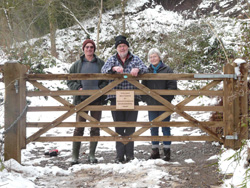

| Huntley Quarry Geology Reserve – Carrying out further conservation work, providing new interpretation materials and improving access to the reserve. (Part funding for this project has already been agreed and we are waiting to hear about the remainder). |
| LGAP Implementation – Producing an LGAP document is only the first stage of a long term process. The actions set out in the plan need to be put into practice. This requires the services of a dedicated GAP officer to work with the county and district authorities and other relevant organisations in order to achieve the aims of the plan. |
| RIGS Re-evaluation – The growing number of RIGS in Gloucestershire means that a complete re-evaluation of sites is needed. Some sites may have been superseded by new and better sites, some may have degraded and need either conservation or reclassification, some may have been improved or extended (as with working quarries). In order to keep our records as up to date and useful as possible, all sites need looking at again and the new information added to our database. |
| Forest of Dean and Stroud Geodiversity Trails –
Following on from the successful Cotswolds Geodiversity Trails project (see Past Projects), we would like to do the same thing for the Forest of Dean and Stroud areas. This would produce an overview leaflet highlighting places of geodiversity and heritage interest, plus a series of site specific guides for that area. |
| Rock and Fossil Roadshows – Our Roadshows remain extremely popular with schools and the public alike, but are very difficult to resource by themselves. We need the support of project funding, and/or the services of a dedicated Volunteer Roadshow Manager to sustain the Roadshows into the future. |
| Gloucestershire Churches Building Stones –
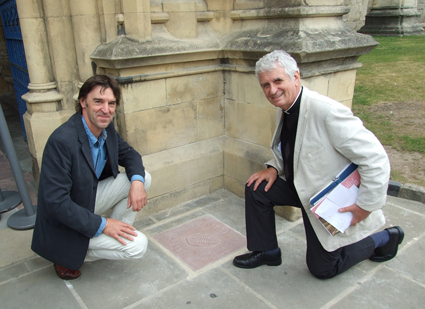
A project to interpret the geology of Gloucestershire using the local building stones used in the construction of the counties churches. Often the quarry that supplied the stone for the church is very close by and the church walls can be used to explain the local geology. This provides an ideal way for disabled people to access geology easily and safely. |
| New Gloucestershire Uncovered Trails – Adding to our catalogue of Gloucestershire Uncovered Trail Guides, providing wider coverage of interpretive publications over the county. |
| Stony Furlong and Chedworth Valley Geology and Landscape Trail – The old quarry and railway cutting known as Stony Furlong exposes part of the White Limestone (Great Oolite Group), and Chedworth Valley is one of many deeply incised valleys of the Cotswolds, fed by springs emanating from the limestones in the valley sides. The trail explores the uses of local stone, from building and roofing, to aggregate and walling. |
| South Cerney Geology and Landscape Heritage Trail – The pretty village of South Cerney has a wealth of recorded history going back to the Bronze Age, yet it is the geology on which the village stands that has determined its character. This guide leads a walk around the village to see how the rocks have shaped its landscape and development. It can be linked to a second trail of similar length in nearby Keynes Country Park. |
| Keynes Country Park Geology and Landscape Heritage Trail – The Cotswold Water Park is one of the most rapidly changing landscapes in Britain today. Sand and gravel extraction leaves large pits that are allowed to flood to create lakes, used for leisure and as wildlife havens. The gravels were deposited here by a major river system during the Ice Ages when man started to settle the area. Removal of soil and gravel has not only yielded a treasure trove of archaeological remains, but also revealed a fascinating natural history story stretching back 165 million years. |
| Huntsmans Quarry Geology and Wildlife Trail – This trail is located just north of the village of Naunton, in the heart of the Cotswolds. You will see a disused quarry face, now a Site of Special Scientific Interest (SSSI), footprints from the 150 million year old dinosaur 'Megalosaurus', and learn about the flora and fauna inhabiting the area today. You will find out what the stone here is used for, and how the land is restored once quarrying has finished. |
| Foss Cross Quarry Geology Guide – The quarry at Foss Cross was active during the first part of the twentieth century extracting White Limestone for use as an aggregate in construction work and as ballast on the old Cheltenham to Southampton railway line. The White Limestone Formation is part of the Great Oolite Group, dating from c. 165 million years ago, and different beds in the quarry face demonstrate different features and a range of fossils. |
| Coates and the Thames & Severn Canal / The Source of the Thames Geology and Landscape Heritage Trail –
This guide explores the area around the village of Coates looking at landscape and heritage features and their relationship to the geology of the area. Either a 3km or 5.5km trail can be followed, with the option of diverting to look at the source of the River Thames. During your walk, you will see rocks dating back c. 165 million years and will learn how the composition, location and fracturing of these rocks has given us building stone and springs, dry valleys and a major river, engineering difficulties and one of the most important aquifers in the UK. |
| Chedworth Railway Cutting Geology Trail – The railway cutting running behind the Roman Villa at Chedworth exposes a faulted section through the upper part of the Inferior Oolite Group. The rocks contain numerous fossils and the railway line is now a wildlife reserve, owned and managed by Gloucestershire Wildlife Trust. Active rock forming can be seen in the cutting where a spring is depositing tufa over the side of the cutting. |